
Article: Bakuchiol vs Retinol (and Retinal): What’s the Difference?
Bakuchiol vs Retinol (and Retinal): What’s the Difference?
How to choose between a botanical retinol alternative and vitamin A, based on your skin’s needs.
If you’re comparing bakuchiol vs retinol, you’re probably looking for smoother skin, fewer visible lines and a more even complexion. You may also be wondering whether those results have to come with dryness, peeling or irritation.
Then retinal enters the conversation, and the choice becomes more confusing.
These ingredients share some skincare benefits, but they are two different compounds. Retinol and retinal are forms of vitamin A.
Bakuchiol is a botanical ingredient with some similar effects, although it is not vitamin A and does not become vitamin A in your skin.
Understanding that distinction helps you choose a product for what it can realistically offer. At Mukti Organics, we work with both bakuchiol and retinal because each has a valuable place in a considered skincare routine.
Why Everyone Is Talking About Vitamin A Skincare
Vitamin A has earned its reputation through years of research into skin renewal and visible ageing. Depending on the form and formulation, it can help improve the appearance of fine lines, uneven pigmentation and rough texture.
Consideration needs to be taken into account that “vitamin A” describes a family of ingredients. Retinol, retinal and prescription retinoic acid are related, yet they behave differently in the skin.
The formulation matters too. Concentration, stability, delivery and the supporting ingredients all influence the experience. A higher percentage on the bottle doesn’t automatically mean a better result.
As a formulator, I’m interested in what you can use consistently while keeping your skin comfortable. That becomes particularly relevant when skin starts changing through perimenopause, ageing or when a routine your skin once tolerated begins to feel too much.
What is Retinol?
Retinol is a form of vitamin A within the retinoid family. It is widely used in cosmetic skincare for concerns such as fine lines, uneven tone and texture.
Before it can exert many of its effects, the skin converts it into retinal, then into retinoic acid. Retinoic acid interacts with receptors found in the skin that help regulate processes including cellular differentiation and renewal.
The pathway is:
Retinol → Retinal → Retinoic acid
That two step conversion helps explain why retinol generally acts more gradually than prescription retinoic acid. It can still be effective, particularly when the product is well formulated and used consistently.
Retinol can also cause dryness, flaking, redness and stinging, especially when introduced too quickly. Your skin’s tolerance, the concentration and the rest of your routine all play a part.
What is Retinal (Retinaldehyde)?
Retinal, also called retinaldehyde, is another form of vitamin A. It sits one step closer to retinoic acid in the conversion pathway:
Retinal → Retinoic acid
This is the central retinal vs retinol difference. Retinal requires one conversion step, while retinol requires two.
That makes retinal an efficient option for delivering vitamin A benefits. Clinical research has shown improvements in photoaged skin with retinal formulations, including skin texture and the appearance of wrinkles.
Keeping in mind that fewer conversion steps do not guarantee faster visible results in every product. Nor do they mean retinal cannot irritate. The finished formula and how you introduce it remain essential.
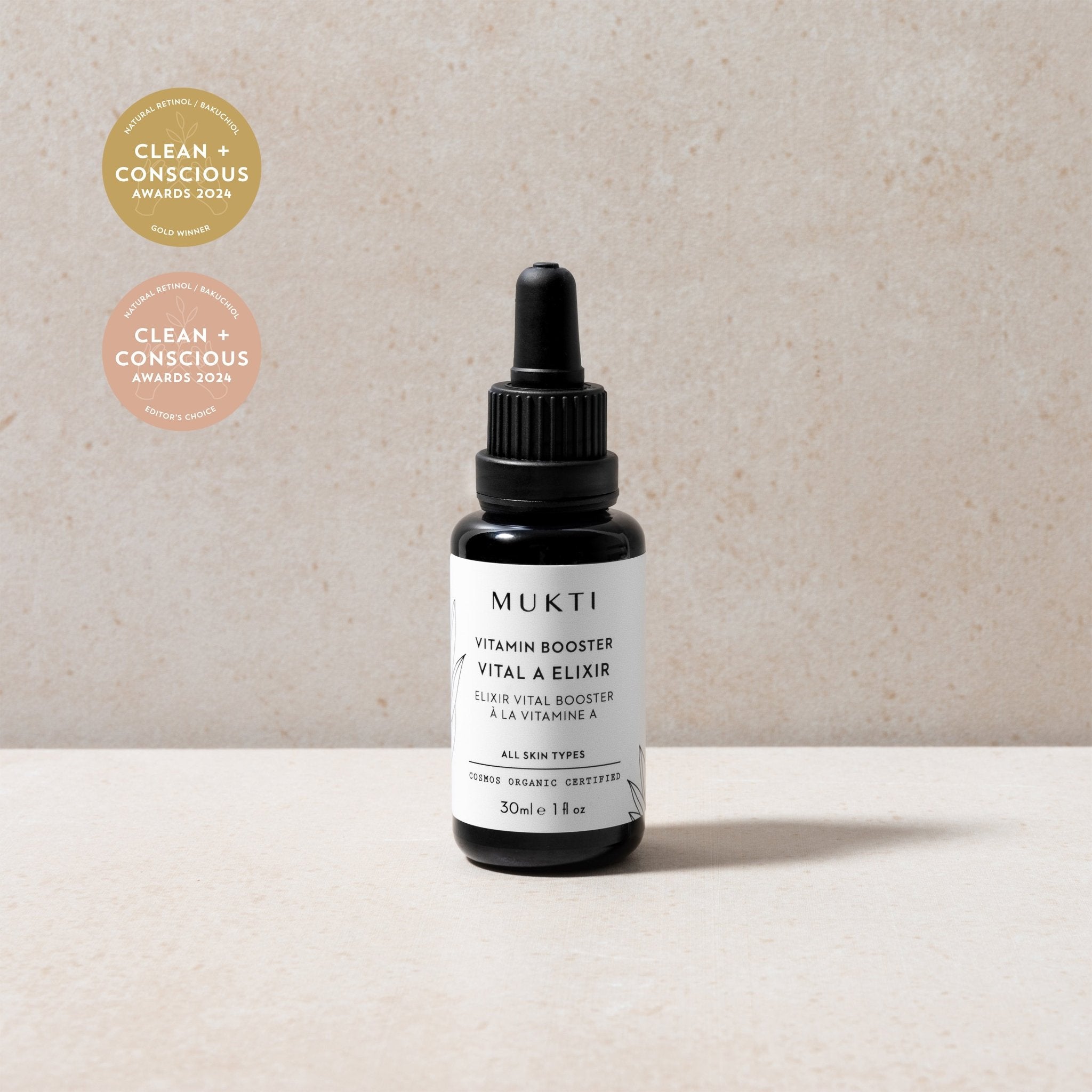
Our Vital A Elixir combines retinal with bakuchiol, Coenzyme Q10 and nourishing botanical oils, including buriti and rosehip. It’s designed to address visible ageing, uneven tone and texture within a supportive formulation.
Use the current formula in the evening and introduce it gradually.
Seek advice re: usage if pregnant or breastfeeding.

What is Bakuchiol?
Bakuchiol is a plant derived compound associated with the seeds and leaves of *Psoralea corylifolia*, also known as babchi.
It is often described as a natural retinol alternative because research has identified some similar effects on the skin, despite its different chemical structure.
Laboratory studies have explored its influence on collagen related processes and gene expression. Human studies have also reported improvements in visible wrinkles and pigmentation.
Bakuchiol does not require conversion into retinoic acid. It offers a different approach for someone seeking support for visible ageing without using a retinoid. Purified cosmetic bakuchiol should also be distinguished from babchi oil or a crude plant extract. They are not interchangeable ingredients.
Is bakuchiol as effective as retinol?
A frequently cited study published in the *British Journal of Dermatology* in 2019 compared the two ingredients over 12 weeks.
The 44 participants used either a 0.5% bakuchiol cream twice daily or a 0.5% retinol cream once daily. Both groups showed improvements in wrinkle surface area and hyperpigmentation, with no statistically significant difference between groups. Retinol users reported more scaling and stinging.
That’s encouraging evidence for bakuchiol, particularly where tolerance is a concern. It does not prove that every bakuchiol product equals every retinol product. The study was small, the application frequencies differed, and it did not compare bakuchiol with retinal.
For bakuchiol vs retinal, we cannot assume equivalent results from a study that tested retinol.
Bakuchiol vs Retinol vs Retinal: Side by Side Comparison
|
What you need to know |
Bakuchiol |
Retinol |
Retinal |
|
Ingredient type |
Botanical compound; not a retinoid |
Vitamin A; a retinoid |
Vitamin A; a retinoid |
|
Conversion in the skin |
Does not convert into retinoic acid |
Two steps to retinoic acid |
One step to retinoic acid |
|
Main cosmetic focus |
Visible lines, uneven tone and texture |
Visible lines, uneven tone and texture |
Visible lines, uneven tone and texture |
|
Research |
Promising human studies; a smaller evidence base |
Established clinical research |
Clinical studies support benefits for photoaged skin |
|
Tolerance |
Better tolerated than retinol in the small comparison study; reactions remain possible |
Dryness, peeling and irritation can occur |
Irritation can occur; tolerance depends on the formula |
|
When to apply |
Follow the product directions; some formulas allow morning and evening use |
Generally evening |
Evening for Mukti Vital A Elixir |
|
Pregnancy |
Not a retinoid, but dedicated pregnancy safety evidence is limited; seek individual advice |
Avoid during pregnancy |
Can use Bioactive Renewal Night Serum. Seek advice for Vital A if pregnant or breastfeeding |
|
Mukti option |
Bioactive Renewal Night Serum |
Vital A uses retinal rather than retinol |
Vital A Elixir, which also contains bakuchiol |
There is no direct percentage equivalence between these ingredients. A 1% bakuchiol serum is not automatically stronger than a lower percentage retinal serum. They work differently, and the entire formulation contributes to the result.

Which One Is Right for You?
Your choice should reflect your skin’s current condition, your concerns and what you can use comfortably. Age alone is not enough to determine which ingredient you need.
Choose Bakuchiol If…
You’re seeking a botanical approach to visible ageing, prefer to avoid retinoids, or have found conventional retinol difficult to tolerate.
Bakuchiol for sensitive skin is a reasonable consideration, but “natural” does not guarantee compatibility. Patch test and look at the complete formula, particularly if you have allergies or persistent reactivity.
Our Bioactive Renewal Night Serum contains 1% bakuchiol alongside niacinamide, vitamin C, liquorice root and papain enzyme. It helps improve the appearance of dullness, uneven tone, texture and fine lines without containing retinol or retinal.
It’s a broader overnight treatment rather than a single ingredient bakuchiol serum. Papain provides gentle enzymatic exfoliation, so introduce it gradually if your skin is sensitive or your barrier is compromised.
If your skin is actively burning, peeling or experiencing a rosacea flare, prioritise comfort and barrier support before adding a renewal treatment. A gentler ingredient still needs the right timing.
Choose Retinal If…
You want a vitamin A approach to fine lines, uneven texture and pigmentation, and your skin is ready for a gradually introduced retinoid.
Vital A Elixir is our option for this approach. Its combination of retinal and bakuchiol means choosing retinal does not require leaving botanical actives behind.
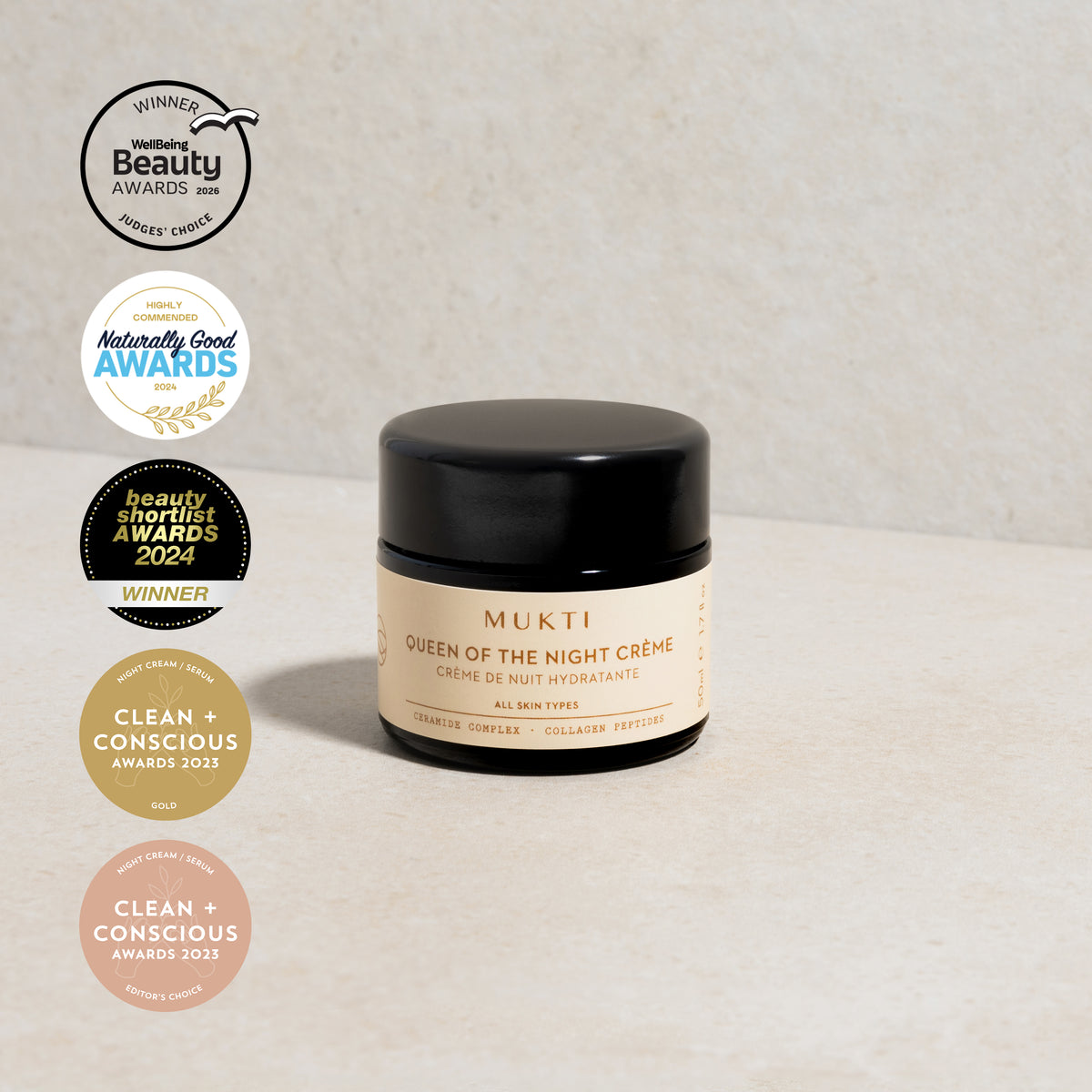
Begin once every few evenings, following the product directions. Gently press onto clean, dry skin and follow with a moisturiser such as Queen of the Night for additional hydration. Increase frequency only if your skin remains comfortable.
Keep the routine simple while introducing it. Avoid adding new exfoliants or several active treatments at the same time, and use daily broad spectrum sunscreen such as our Solar Veil SPF 30.
Persistent burning or peeling is a reason to pause and reassess vitamin A usage. You do not need to push through discomfort to demonstrate that vitamin A is working.
Can You Use Them Together?
Yes. Bakuchiol and retinal can be formulated together, as they are in Vital A Elixir.
They offer complementary approaches, but their combination should not be presented as a guarantee of superior results or freedom from irritation.
You can also use Bioactive Renewal Night Serum and Vital A within the same routine once you tolerate each individually. Start with one product, establish how your skin responds, then consider adding the other gradually.
Alternating evenings is another option. You don’t need to use both every night to build a worthwhile routine.
For skin that has become drier or less predictable during menopause, hydration and a comfortable moisture barrier deserve as much attention as renewal. Review what your skin needs now rather than continuing a routine that no longer suits it.
A Note on Certified Organic Vitamin A
If you’re searching for “organic retinol Australia”, it helps to separate the active ingredient from the certification of the finished product.
Bakuchiol is not organic retinol. Retinal is not retinol either. And a product containing organic botanical ingredients is not necessarily a certified organic product.
Our Vital A Elixir is a COSMOS Organic certified retinal serum. That describes the finished formulation’s certification; it does not mean every ingredient, including retinal, comes from organic agriculture.
Certification, ingredient origin and efficacy answer different questions. Look for the certification mark on the specific product and read its ingredient list and usage guidance.
Since founding Mukti Organics in 2000, I have developed our formulations in house, bringing botanical ingredients and carefully selected bioactives together. That oversight allows us to consider how an active performs within the whole formula.
For a retinoid free approach, explore Bioactive Renewal Night Serum. For vitamin A combined with botanical support, explore Vital A Elixir. Choose the approach you can use consistently, and give your skin time to respond.

Author
Written by Mukti, Founder & Formulator





Leave a comment
This site is protected by hCaptcha and the hCaptcha Privacy Policy and Terms of Service apply.